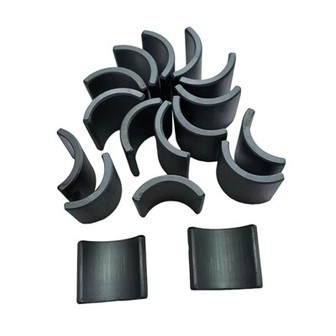
Role of Motor Magnets like Fitness Equipment Motor Magnet in Modern DC Motors
In today's diversified motor applications, permanent magnets play an essential role in determining performance, efficiency, and reliability. Permanent magnets such as the Fitness Equipment Motor Magnet produced by Lianqiang Magnet are indispensable components in DC motors used for treadmills, massage chairs, household appliances, power tools, and automotive systems. These magnetic segments are engineered to deliver consistent magnetic flux, strong torque response, and stable operation in a wide range of working conditions.
A motor magnet's primary function is to create a stable magnetic field around which the armature rotates. In high-duty applications such as fitness equipment, the magnet needs to withstand long operating hours, frequent start-stop cycles, and variable load conditions. This requires magnets with uniform magnetic properties, high remanence, and low coercivity loss to maintain motor efficiency over extended periods.
One of the most widely used magnetic materials for such applications is neodymium permanent magnet (NdFeB), prized for its high magnetic energy product and strong magnetic field intensity. NdFeB magnets allow motors to achieve higher torque and efficiency while maintaining a compact size - a crucial factor in fitness equipment where space and weight are important design considerations.
Another important class of motor magnets is ferrite magnets, which are cost-effective and provide good magnetic stability under moderate temperature ranges. These are frequently selected for household appliances and general-purpose motors where cost, corrosion resistance, and reliable performance are priorities.
Magnet design and fabrication must also account for shape, tolerance, and magnetization direction. For instance, disc, block, ring, and segment shapes are used depending on the motor's structure and performance requirements. Precision in dimension - often within ±0.05 mm - ensures uniform air gaps and prevents imbalance, which can otherwise cause vibration, noise, and reduced service life.
In addition to magnetic material selection and geometry, operating environment factors - such as temperature, moisture, and mechanical stress - affect magnet performance. Advanced surface coatings and material treatments improve corrosion resistance and long-term stability, especially in high-humidity or high-temperature environments. As a result, motors using well-engineered magnets demonstrate superior durability and service life in demanding applications.
With continued growth in industries like fitness equipment, electric vehicles, automation, and smart home devices, demand for high-quality motor magnets continues to rise. Suppliers capable of precision manufacturing, rigorous quality control, and customization - such as tailoring the magnet specifications for Fitness Equipment Motor Magnet or automotive motor applications - are well positioned to support future innovation and global market needs.